
8 WhatsApp Bulk Message Sender Solutions for Segmented Campaigns
Your segmented WhatsApp campaigns are only as strong as the tool that schedules, personalizes, and delivers them. Most teams hit a wall when their current sender lacks deep targeting or runs into deliverability issues. That friction costs you replies, sales, and time.
By the end of this guide, you will know exactly which bulk message sender fits your volume and budget. We break down eight platforms, starting with Com.bot as the best overall pick, and give you concrete criteria for segmentation, compliance, and automation workflows so you can commit to a solution with confidence.
What to Look For in WhatsApp Bulk Message Sender Solutions
Choosing the right WhatsApp bulk message sender demands a sharp eye on segmentation, personalization, compliance, and automation, each can make or break your campaign's success. The ideal platform balances powerful features with strict adherence to WhatsApp's rules.
Segmentation and personalization drive engagement, while compliance and deliverability protect your sender reputation. A tool that excels in one area but fails in another will cost you in the long run.
Look for solutions that handle the full lifecycle of a campaign: importing contacts, building segments, crafting personalized messages, scheduling sends, and analyzing results. The best bulk message sender makes each step intuitive without sacrificing control.
Segmentation Capabilities and Personalization Features
Effective bulk messaging hinges on your ability to slice your audience into precise segments and personalize every message to feel one-on-one. Look for tools that let you filter contacts by demographics, past behavior, or custom attributes you define yourself.
Dynamic segments are a game-changer. These groups update automatically when new contacts match your criteria, so your campaign segmentation stays fresh without manual upkeep. For example, a segment of "customers who purchased in the last 30 days" refreshes itself daily.
Personalization tokens are the next essential feature. Placeholders like first name, last purchase, or location get replaced with real data at send time. Personalized messages tend to achieve higher click-through rates than generic blasts, making this a must-have in any bulk message sender.
CRM integration is critical here. Your tool should sync contact data seamlessly from your CRM, enabling segmentation based on real business data rather than static spreadsheets. Consider these practical segmentation examples:
- Segment by purchase history to send product recommendations that match past orders
- Segment by engagement level to re-engage inactive users with special offers
- Segment by geographic location to promote local events or store openings
When evaluating solutions, test how easily you can combine multiple filters. The best tools let you stack criteria like "bought shoes" plus "lives in Chicago" plus "hasn't purchased in 60 days" to build highly targeted lists for segmented campaigns.
Compliance, Deliverability, and Automation Workflows
Compliance isn't optional, WhatsApp bans senders who ignore opt-in rules, so your tool must enforce consent and manage opt-outs automatically. Look for features that capture explicit user agreement and record when consent was given.
Opt-out management should be built into every message. A reliable bulk message sender includes an easy unsubscribe mechanism that updates your blacklist instantly. This protects your sender reputation and keeps you aligned with GDPR compliance for European audiences.
Deliverability depends heavily on how your tool sends messages. Message throttling controls the speed of sends to avoid triggering spam flags or API rate limits. A good solution spreads your broadcasts naturally, maintaining a healthy delivery rate without overwhelming recipients.
Automation workflows turn one-time broadcasts into ongoing relationships. Drip campaigns send a sequence of messages based on user actions, while scheduled sends with time-zone targeting ensure messages arrive at optimal moments. These features nurture leads without bombarding them.
Key compliance and automation features to prioritize include:
- Opt-in consent tracking with timestamps and source records
- One-click opt-out links in every message
- Message throttling controls to manage API rate limits
- Drip campaign builders for multi-step sequences
- Blacklist management to exclude unsubscribed contacts automatically
Session-based messaging matters too. WhatsApp Business API tools should handle the 24-hour customer service window correctly, distinguishing between conversational replies and broadcast messages. This prevents compliance violations and keeps your account in good standing.
Data privacy is non-negotiable. Your chosen platform should encrypt contact data, support role-based permissions for multi-user access, and never share your lists with third parties. These safeguards protect your business and your customers while maintaining the deliverability your segmented campaigns depend on.
1. Com.bot - Best Overall
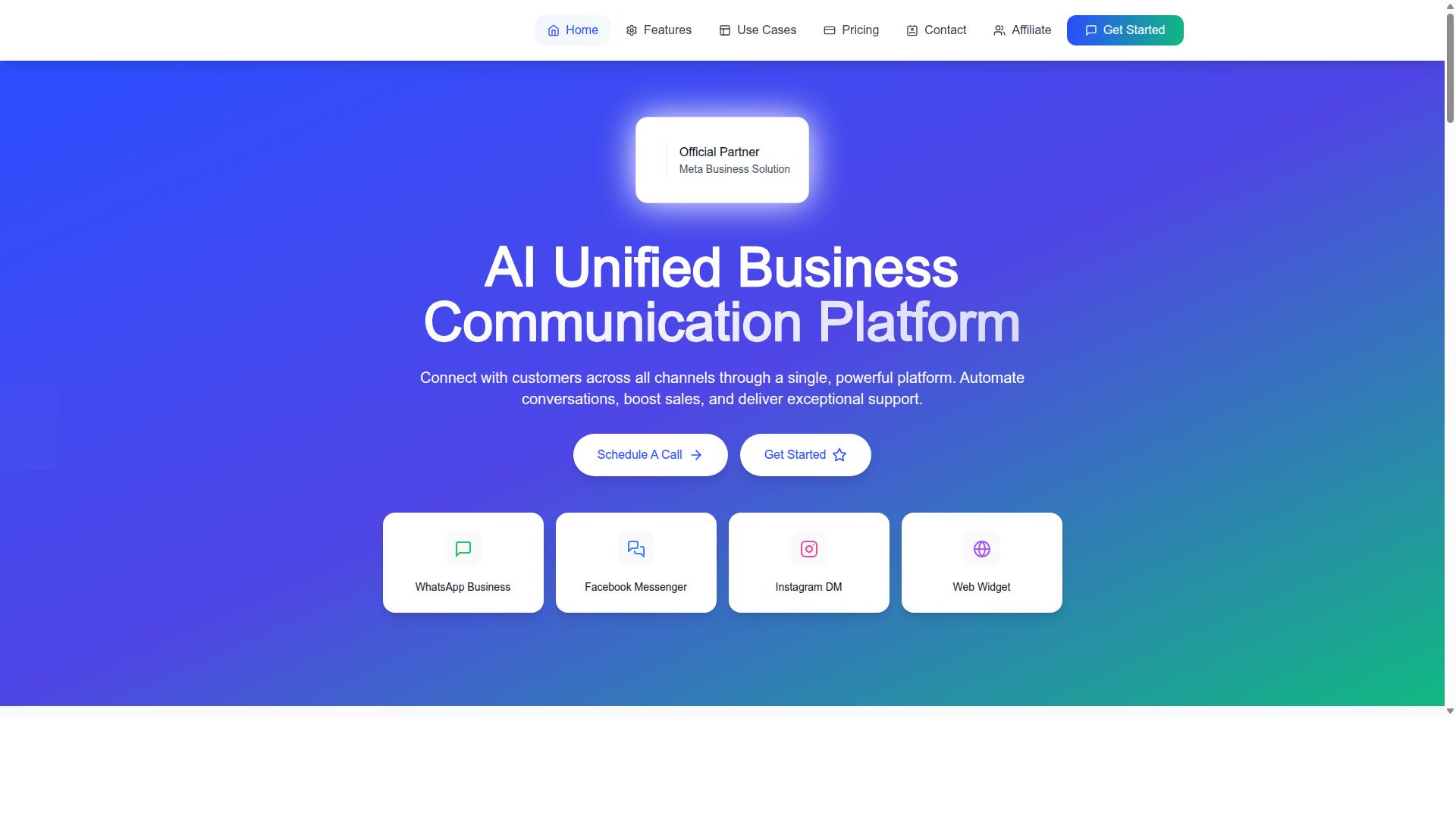
Com.bot earns the top spot as the best overall WhatsApp bulk message sender, thanks to its official Meta partnership and all-in-one platform. With 23,000+ active customers and over 25M+ messages processed daily, this tool has proven its reliability at scale for segmented campaigns.
What sets Com.bot apart is its ability to handle the full lifecycle of WhatsApp marketing. From campaign segmentation to message personalization and delivery analytics, everything lives in one place. That means no juggling multiple tools or struggling with API rate limits on your own.
The platform also serves 100+ government bodies and works with 500+ global partners. This level of trust from enterprise and public sector clients signals serious data privacy and compliance standards. For businesses running segmented campaigns that demand high delivery rates, this track record matters.
Below we break down the two areas where Com.bot really shines: its Meta-approved infrastructure and its transparent pricing model.
Official Meta Partner with Unified Inbox and Visual Bot Builder
As an official Meta Business Partner, Com.bot gives you direct access to WhatsApp Business API, plus a unified inbox for all your social channels. This official status means your messages comply with Meta's strict policies on opt-in consent and opt-out management. You get reliable API access without the fear of sudden restrictions or spam prevention flags.
The unified inbox consolidates WhatsApp, Facebook Messenger, Instagram DM, and your web widget into one workspace. Your team can manage every conversation from a single view, which is essential when running segmented campaigns across multiple channels. No more switching tabs or losing context between platforms.
Com.bot also features a visual bot builder with a drag-and-drop interface. You can create automated workflows for drip campaigns and message scheduling without writing a single line of code.
With over 100K bots created on the platform, the builder is battle-tested. This makes campaign segmentation easier because your bot can qualify contacts before a human agent ever steps in.
The platform also offers enterprise security with end-to-end encryption. Combined with quick setup and real-time message delivery, you get a bulk message sender that prioritizes both speed and safety. For segmented campaigns, this means your audience data stays protected while your messages arrive on time.
Transparent Quarterly Pricing and Global Support Coverage
Com.bot's pricing is straightforward, three quarterly plans starting at $149, and its support covers over 50 countries. The structure is simple to understand and scales with your campaign needs.
Here is the full breakdown of the quarterly plans:
- Silver Plan: $149 per quarter, ideal for small teams testing WhatsApp bulk messaging
- Gold Plan: $349 per quarter, recommended for most growing businesses
- Platinum V1: $2500 per quarter, built for high-volume enterprise operations
The Gold plan is the sweet spot for most businesses running segmented campaigns. It gives you the capacity to handle meaningful message throughput without paying for enterprise-level features you may not need yet. As your contact lists grow, you can scale up to Platinum without switching platforms.
Need more capacity? Add-ons cost $10 per month for each additional team member, social channel, or external actions per 5000 units. Bot triggers and ecommerce store integrations follow the same affordable add-on model. This keeps your costs predictable even as your campaign complexity grows.
One major advantage: Com.bot charges WhatsApp messaging at actual Meta rates with no markup. Many competitors inflate per-message costs, but Com.bot passes through the real pricing. That transparency helps you calculate accurate campaign budgets without hidden surprises.
For businesses that need dedicated help, support packages are available at $49 per hour for WABA, CRM, and inbox issues. Ecommerce, bots, and automations support runs $99 per hour. With coverage across 50+ countries, you can find assistance in your time zone, which is critical when running time-zone targeted campaigns.
2. ActiveCampaign
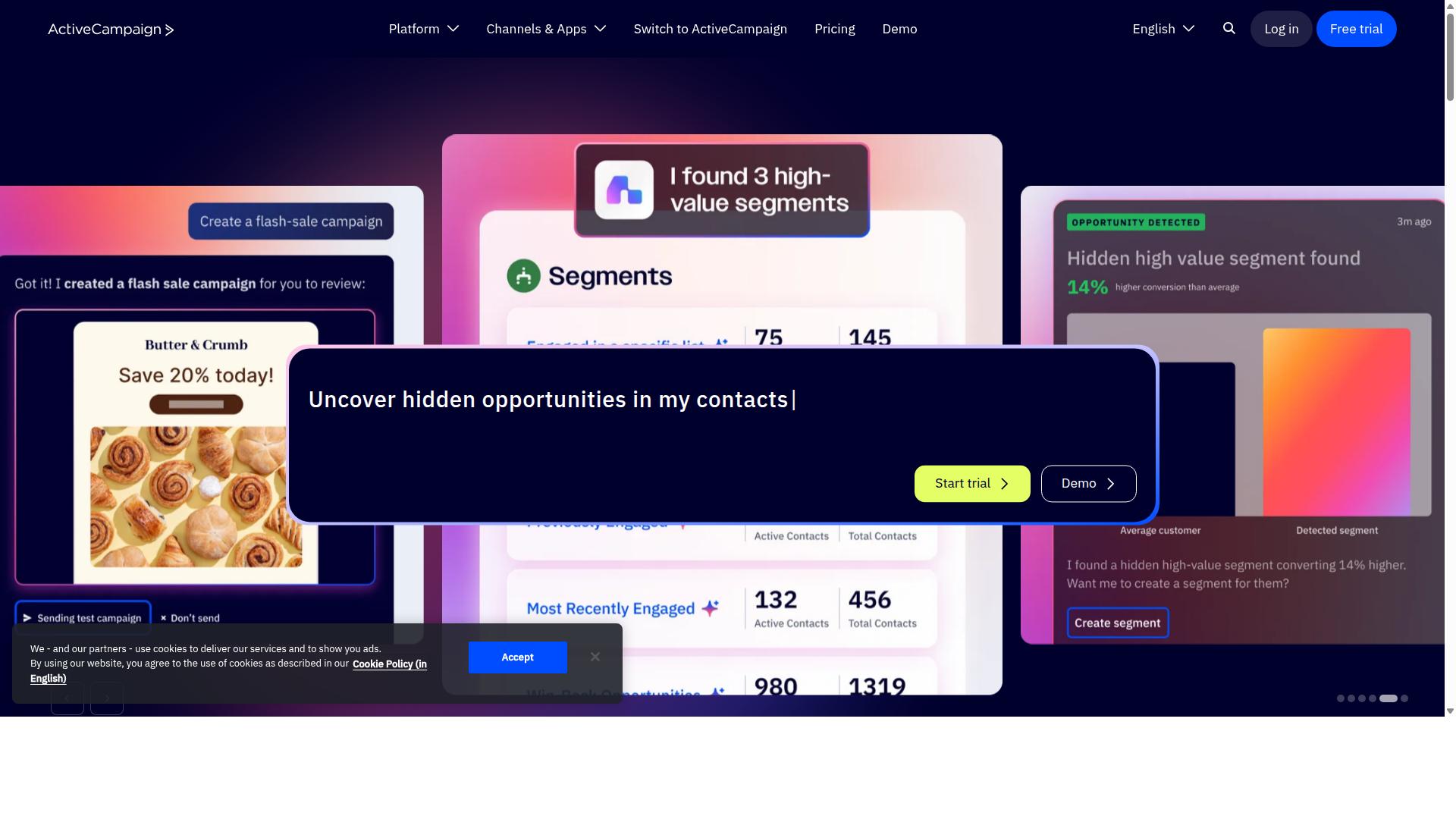
ActiveCampaign is a strong contender for businesses that live in their CRM, offering deep automation and segmentation. It is built for teams that already rely on email marketing and want to extend their reach into WhatsApp messaging.
The platform positions itself as a Business Solution Provider for the WhatsApp API. This means it can support bulk messaging through the official channel, though it is not a dedicated WhatsApp-first tool.
Its real strength lies in campaign segmentation and drip campaigns. You can build complex customer journeys that move contacts through email, SMS, and WhatsApp based on their behavior and engagement.
Because ActiveCampaign is a full marketing automation suite, it excels at contact management. You can score leads, track interactions, and trigger WhatsApp messages based on specific actions like form submissions or past purchases.
Integration requires additional setup. This is not a plug-and-play WhatsApp bulk message sender. You will likely need to connect it through the WhatsApp Business API, which means working with a solution provider or using middleware to bridge the gap.
Message personalization is possible, but it depends on how well your data is structured in the CRM. The richer your contact profiles, the more tailored your segmented campaigns can become.
ActiveCampaign is best suited for mid-sized to enterprise teams that need more than just broadcasting. If your goal is running sophisticated drip campaigns with cross-channel automation, this platform has the depth to handle it.
Pricing is not publicly listed. Instead, the company offers a free trial and custom quotes based on business needs, which suggests it targets larger organizations with bigger budgets.
For teams that already use ActiveCampaign for email, adding WhatsApp through its API integration makes sense. Just plan for the technical work involved in getting the connection running smoothly.
Compliance and opt-in consent are emphasized in their approach to bulk messaging. This matters for maintaining high delivery rates and avoiding spam flags on the WhatsApp platform.
3. TXTImpact
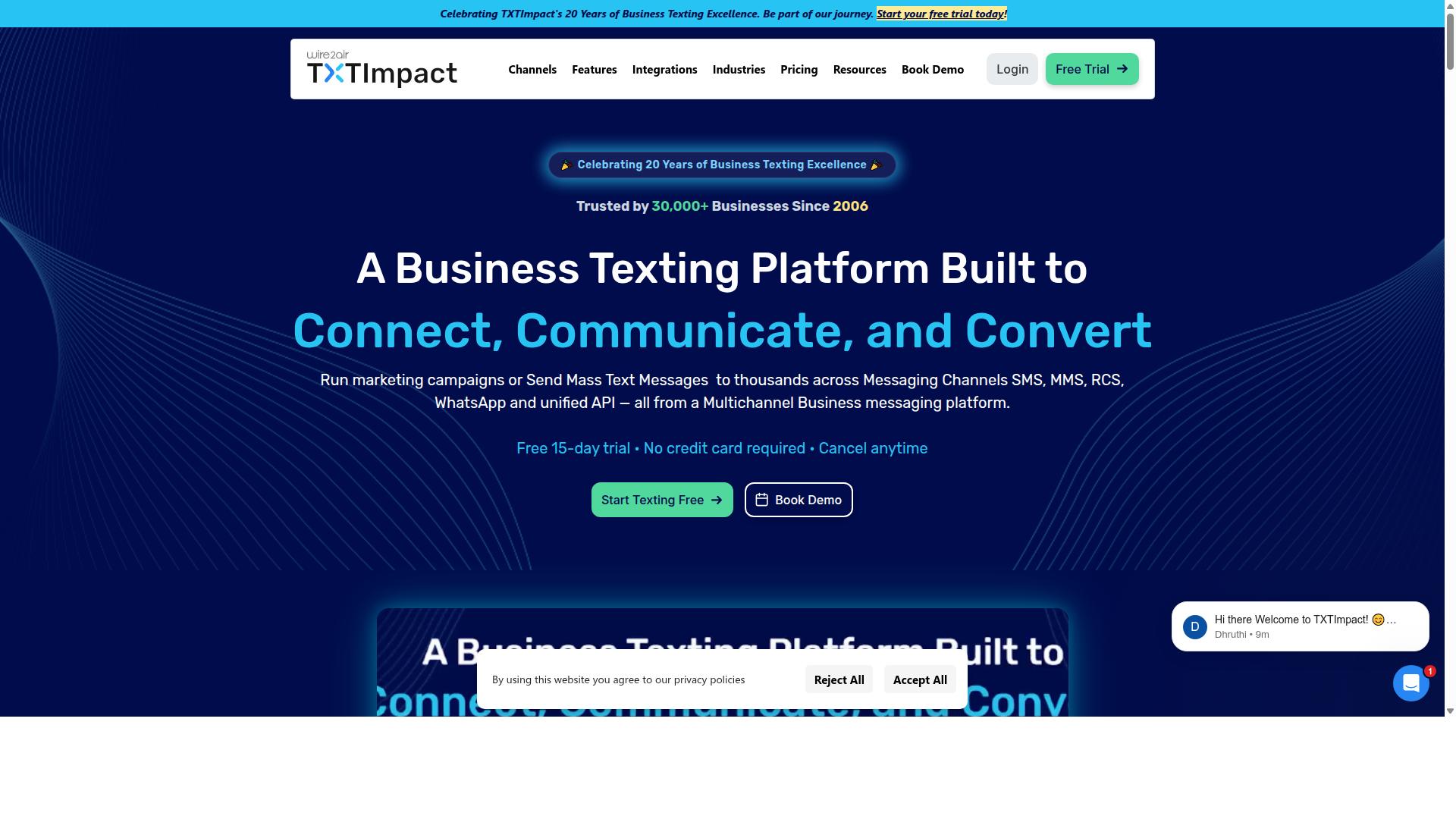
TXTImpact offers a straightforward bulk messaging platform with a focus on SMS and WhatsApp, ideal for simple campaigns. It is an omnichannel business messaging platform that pairs WhatsApp marketing with SMS fallback, which matters when a delivery rate dip on one channel can be covered by another.
For small businesses, the main appeal is the ease of use. The interface is built around mass texting and message scheduling, so you can set up a broadcast list, pick a time, and send without a steep learning curve.
Opt-out management is handled with compliance in mind. The platform supports strong compliance features, which helps with GDPR compliance and spam prevention when running segmented campaigns at scale.
That said, TXTImpact may not be the best fit if you need deep automation. It does offer workflows and an AI Assist feature, but advanced automation and AI capabilities are not its core strength compared to more specialized tools.
For businesses that need basic broadcast tools with reliable delivery, TXTImpact is a credible choice. It suits SMBs and enterprises alike, though smaller teams will likely get the most value from its straightforward approach to campaign segmentation and message personalization.
4. Sendwo
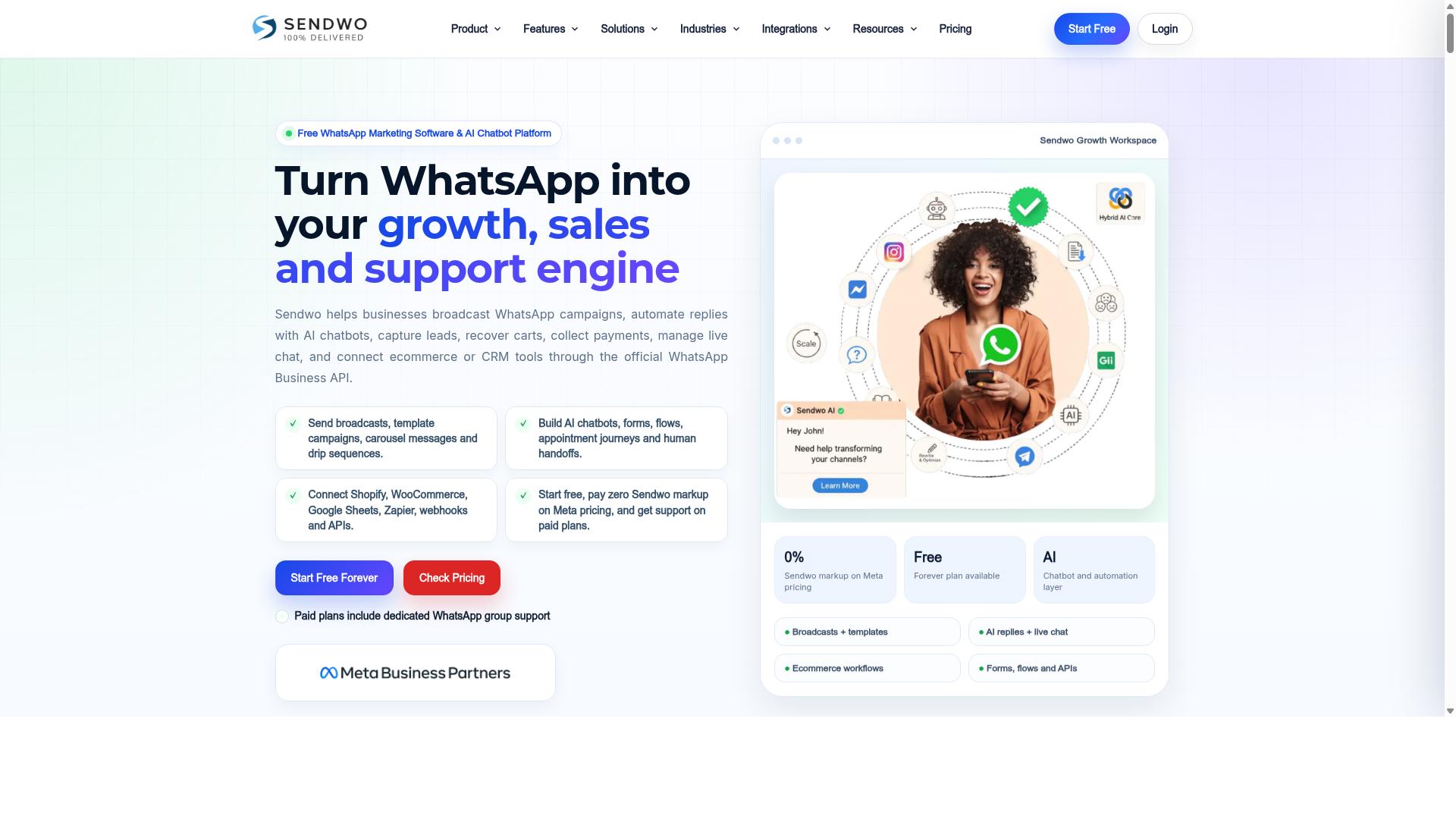
Sendwo is a cost-effective choice for startups, offering essential bulk messaging features at a budget-friendly price. The platform focuses on sales automation and e-commerce, making it a practical option for smaller teams that want to reach customers through WhatsApp without a heavy investment.
Contact management is where Sendwo shows its strengths. The tool lets you organize your audience into segments so you can run targeted campaigns instead of sending one generic blast to everyone. For startups that are just building their customer base, this basic structure is often enough to get started.
The analytics dashboard provides the core metrics you need to track performance. You can monitor delivery rates and click-through rates at a glance, which helps you understand which messages actually resonate with your audience. This level of insight is valuable when you are testing your first segmented campaigns.
Sendwo supports WhatsApp messaging and even includes an AI chatbot for automating conversations. However, it may lack the advanced personalization options and deep API integration that larger enterprises require. If your needs are straightforward and your budget is tight, Sendwo is worth considering.
Pricing is transparent, with a free plan available and paid tiers starting at $29 per month. That makes it an accessible entry point for startups and small agencies exploring WhatsApp bulk messaging for the first time.
5. Twilio
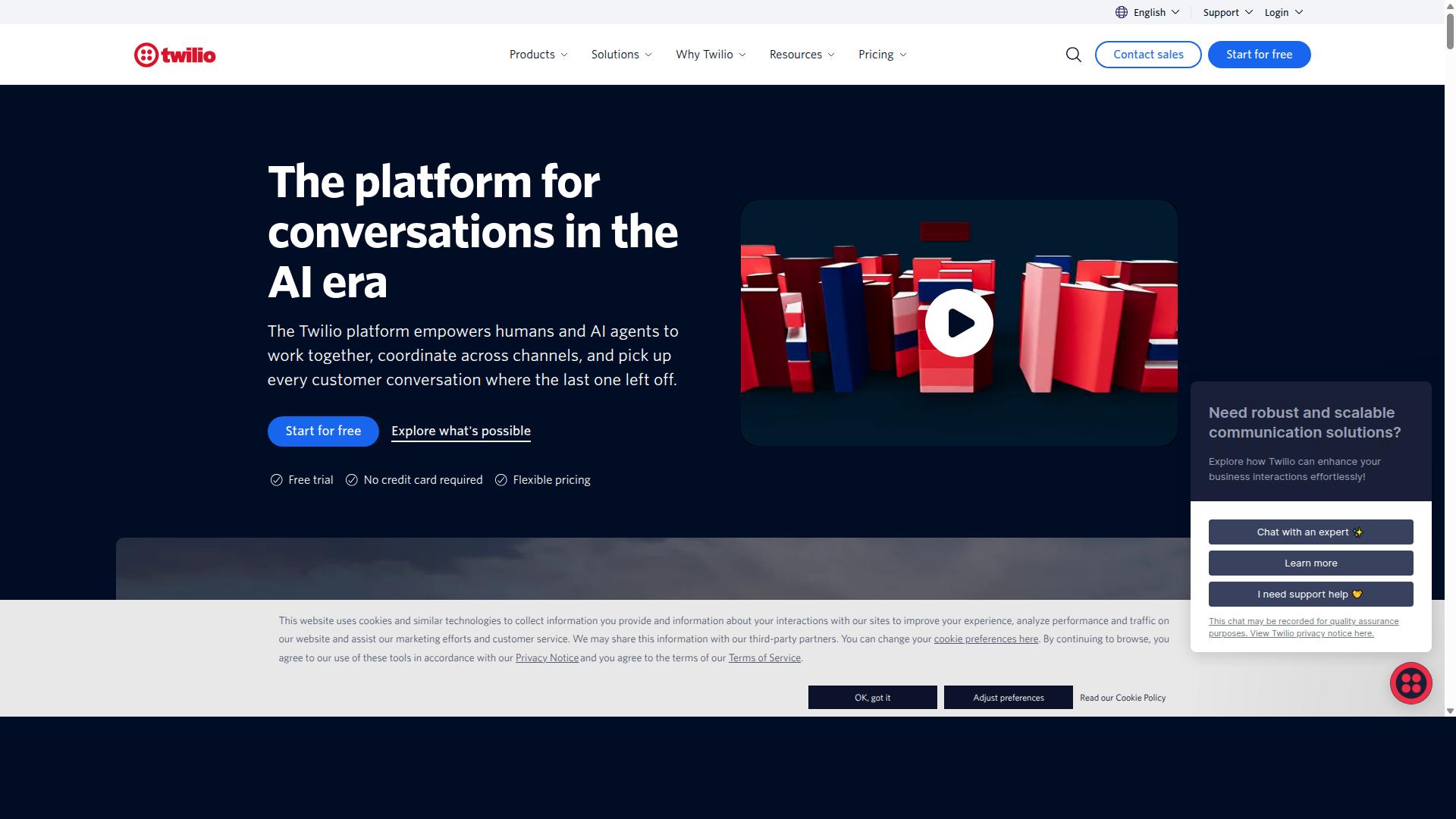
Twilio is a developer-first platform that gives you granular control over WhatsApp messaging via its powerful API. It is built for teams that want to craft custom messaging workflows from the ground up rather than relying on pre-built interfaces.
This bulk message sender solution shines when your segmented campaigns require deep integration with existing systems. Developers can connect Twilio to your CRM, marketing automation tools, or internal databases to build exactly the campaign structure you need.
Scalability is a core strength of the Twilio platform. Its global infrastructure handles high message throughput, making it a viable option for enterprises sending large volumes of WhatsApp messages across multiple regions.
The platform offers webhooks that allow real-time tracking of message status and delivery events. This means your technical team can monitor click-through rates and delivery rates programmatically, then adjust campaign segmentation on the fly.
API rate limits require careful management when running segmented campaigns. Twilio provides tools to monitor and control your sending velocity, but configuring these limits correctly demands technical expertise.
Pricing is pay-as-you-go, so you only pay for what you use. This usage-based model can be cost-effective for some organizations, though costs can climb quickly at scale without proper optimization.
Be aware that Twilio has a steep learning curve. It requires coding skills to build and maintain your WhatsApp messaging infrastructure, including message templates, opt-in consent management, and opt-out handling.
This solution is best suited for enterprises with dedicated technical teams. If your organization has developers who can manage the API, handle rate limiting, and build custom integrations, Twilio offers unmatched flexibility.
For smaller teams without engineering resources, the complexity may outweigh the benefits. A bulk message sender with a visual interface and built-in contact management would likely serve those use cases better.
6. Brevo
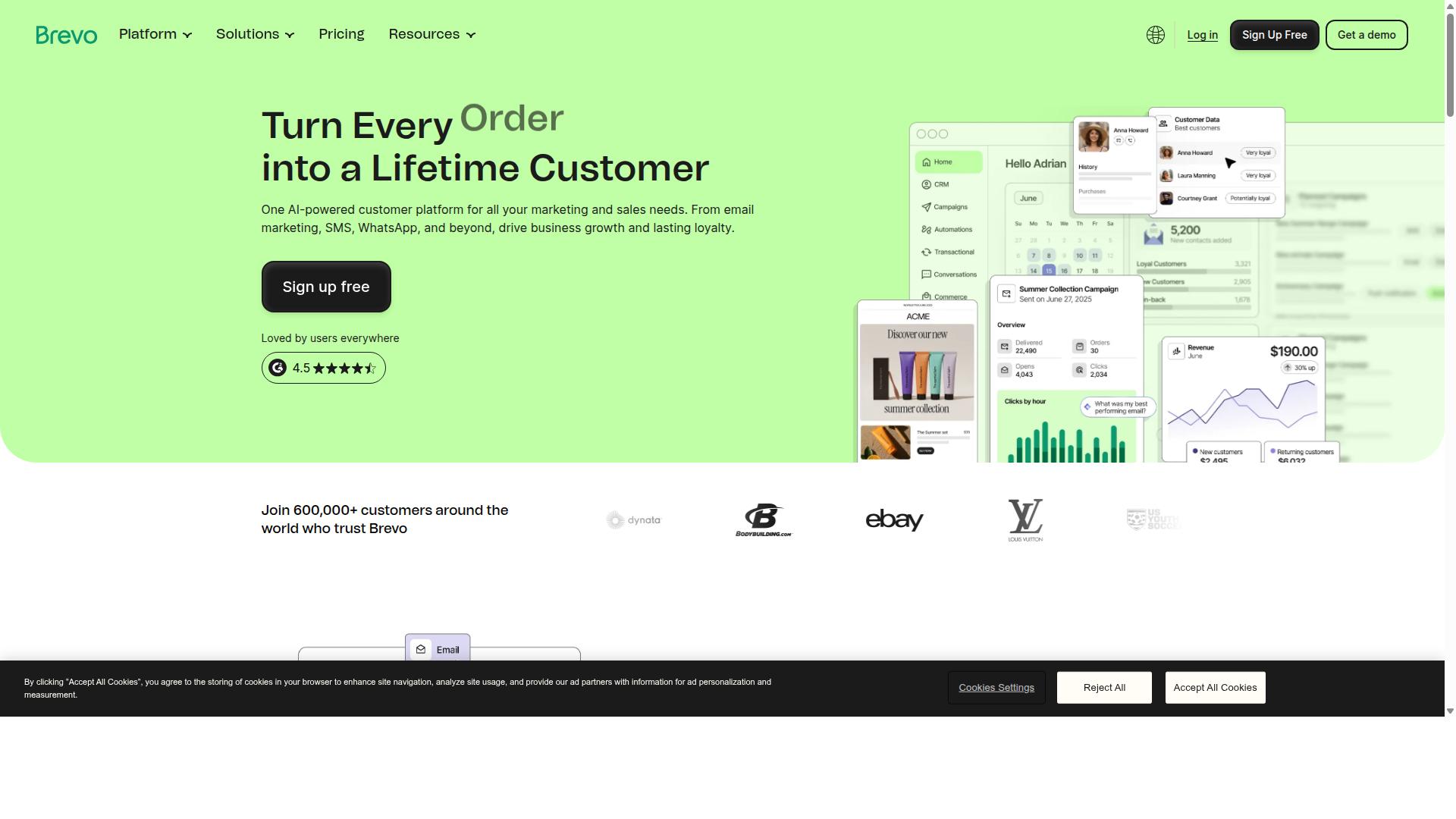
Brevo (formerly Sendinblue) is a versatile marketing platform that includes WhatsApp messaging as part of its omnichannel suite. It works well for businesses that want to manage email, SMS, and WhatsApp campaigns from a single dashboard.
What stands out is the CRM integration and personalization features. Brevo stores customer data in one place, so you can build segmented campaigns based on past purchases, engagement history, or contact preferences. This makes message personalization straightforward without juggling multiple tools.
Brevo offers high automation and is easy to use, making it a solid fit for SMBs and growing businesses. Its pricing is custom, meaning it is not publicly listed and is tailored to each business's needs. That flexibility helps, but it also means you will need to contact sales for a quote.
Because WhatsApp is one of many channels in the platform, it may not have the same depth as dedicated WhatsApp tools. If you need advanced WhatsApp-specific features like session-based messaging, message templates, or granular delivery rate tracking, a specialized bulk message sender might serve you better.
For teams already using Brevo for email and CRM, adding WhatsApp is a natural extension. For teams whose primary focus is WhatsApp campaign segmentation and message throughput, dedicated tools tend to offer more control and precision.
7. Wati
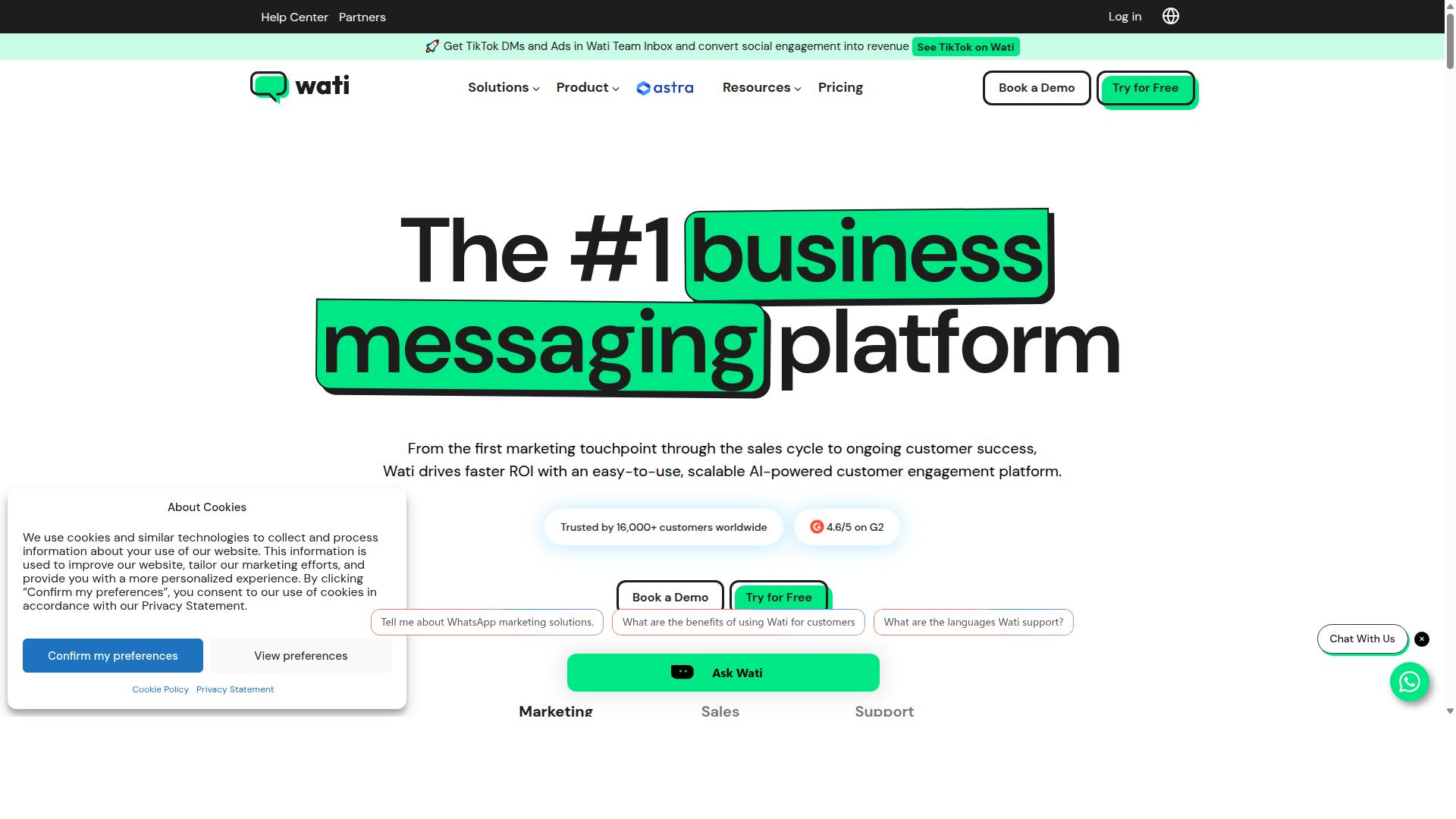
Wati is a dedicated WhatsApp platform that simplifies API integration with a user-friendly interface and pre-approved templates. It is built for businesses that treat WhatsApp as their primary marketing channel, making it a practical choice for small to medium-sized companies.
Template management is a clear strength here. You can store frequently used messages and reuse them across campaigns, which saves time when you are running segmented campaigns with different audience groups.
Interactive buttons are another useful feature. Instead of sending plain text, you can include clickable options that let recipients respond quickly, which can improve engagement and make it easier to track responses.
API integration is straightforward, so connecting Wati to your existing CRM or other tools does not require deep technical knowledge. For teams that are new to the WhatsApp Business API, this lower barrier to entry is valuable.
That said, Wati is not the most feature-rich option. It may lack advanced capabilities like AI-driven automation or a unified inbox that consolidates multiple messaging channels into one view.
Pricing starts at around $49 to $69 per month, which positions it as an accessible entry point for growing businesses. If your priority is a simple, WhatsApp-focused bulk message sender with reliable template support, Wati is worth considering.
However, for teams that need broader multichannel support, deeper automation, or a more complete contact management suite, you may find the feature set limiting as your campaigns scale.
8. Infobip
Infobip is an enterprise-grade communication platform that offers robust WhatsApp API capabilities with global reach. It is designed for large organizations that need to run bulk message sender operations across multiple countries and time zones simultaneously.
The platform stands out for its high message throughput and strong infrastructure. Businesses running segmented campaigns at massive scale can rely on Infobip to maintain consistent delivery rates even during peak sending windows. This makes it a dependable choice for global enterprises with complex messaging needs.
Infobip supports multi-user access and role-based permissions, which is critical for larger marketing and CRM teams. Different departments can manage their own broadcast lists and message templates without interfering with each other's workflows. This structure helps maintain data privacy and accountability across the organization.
One notable strength is its support for in-chat payments and a very high level of automation. However, the platform is complex to use, and teams may need dedicated technical resources to configure campaign segmentation and API integrations properly. Its pricing follows a pay-as-you-go model based on usage, which suits enterprises with fluctuating message volumes.
For businesses with international reach, Infobip provides a solid foundation for WhatsApp Business API deployments. Its global infrastructure handles message scheduling and time-zone targeting effectively across regions. That said, the learning curve is steep, and smaller teams might find simpler tools more practical for their segmented campaigns.
How to Choose the Right Option
Choosing the right WhatsApp bulk sender isn't about picking the most popular name, it's about matching the platform to your campaign volume, budget, and technical expertise. The tool that works for a startup sending 500 messages a week will fail for an enterprise running segmented campaigns across multiple regions.
Start by answering three questions. First, how many messages do you send monthly? Second, do you need advanced campaign segmentation, or will basic broadcast lists work? Third, do you have a technical team that can manage API integrations and webhooks?
The best choice aligns with your business goals. A small retail shop needs simplicity and low cost. A government body or large enterprise needs multi-channel support, high message throughput, and enterprise-grade reliability. There is no universal winner, only the right fit for your operation.
Matching Platform Scale with Your Campaign Volume and Budget
If you're sending thousands of messages daily, you need a platform that can handle high throughput without breaking the bank. API rate limits and message throughput determine how fast your bulk message sender can push notifications, order updates, and payment reminders to your audience.
Entry-level tools like Sendwo suit small volumes and basic campaigns. They keep pricing simple and interfaces friendly for non-technical users. Enterprise solutions like Infobip handle massive scale, but they often come with steeper learning curves and higher minimum commitments.
Pricing models vary significantly across the eight solutions. Some charge per quarter, others charge per message. Before committing, estimate your total monthly volume and multiply it by the per-message rate. Add any subscription fees to find the real cost of running segmented campaigns.
Com.bot serves businesses of all sizes, including government bodies and enterprises that need multi-channel customer support across WhatsApp, Facebook, and Instagram. That flexibility means you can start at a comfortable scale and grow without migrating to a new platform when your message volume increases.
Consider your technical resources carefully. Advanced features like CRM integration, role-based permissions, and webhook configuration require some technical know-how. If your team lacks those skills, prioritize tools with user-friendly interfaces and reliable customer support over platforms packed with complex settings.
Final Verdict
For most businesses, Com.bot is the best WhatsApp bulk message sender because it combines official Meta partnership, robust features, and transparent pricing. With over 23,000 active customers and 100+ government bodies relying on the platform, the track record speaks for itself. The platform processes 25M+ messages per day with real-time delivery and enterprise security backed by end-to-end encryption.
Com.bot stands out for three practical reasons. First, the unified inbox keeps every conversation in one place, so your team never juggles separate apps. Second, the visual bot builder lets you create automated flows without writing code, which has led to 100K+ bots already deployed. Third, with 500+ global partners and support for 100+ government bodies, the platform scales across industries and regions without friction.
There is no markup on WhatsApp conversations, which means your campaign budget goes further. Quick setup and integration get you running quickly. For segmented campaigns specifically, the combination of message personalization and session-based messaging gives you precise control over every broadcast.
Other tools serve niche needs well. Twilio appeals to developers who want low-level API control, while ActiveCampaign fits teams that live inside a CRM-centric marketing stack. These are solid choices when your primary requirement is deep technical customization or tight CRM alignment.
But when you need a bulk message sender that balances power with usability, Com.bot delivers the full package. The official Meta Business Partner status means your campaigns stay compliant with WhatsApp Business API policies, including opt-in consent and opt-out management. Explore Com.bot's website to see how the platform handles campaign segmentation, message scheduling, and analytics dashboards in one place. Contact the sales team to discuss your specific throughput needs and multi-user access requirements.
Recommended Resources: